
Insurance · Virginia & Maryland
How a storm-damage roof claim works in Virginia and Maryland, step by step, and what you can expect to pay.
The short answer
If wind, hail or a fallen tree damaged your roof, homeowners insurance often pays for the repair or replacement, and your out-of-pocket cost is typically your deductible. Age and normal wear generally are not covered.
The process is the same with most insurers: protect the house, document the damage, file the claim, meet the adjuster, agree the scope of work, then get the roof done. Updated November 2026.
Step by step
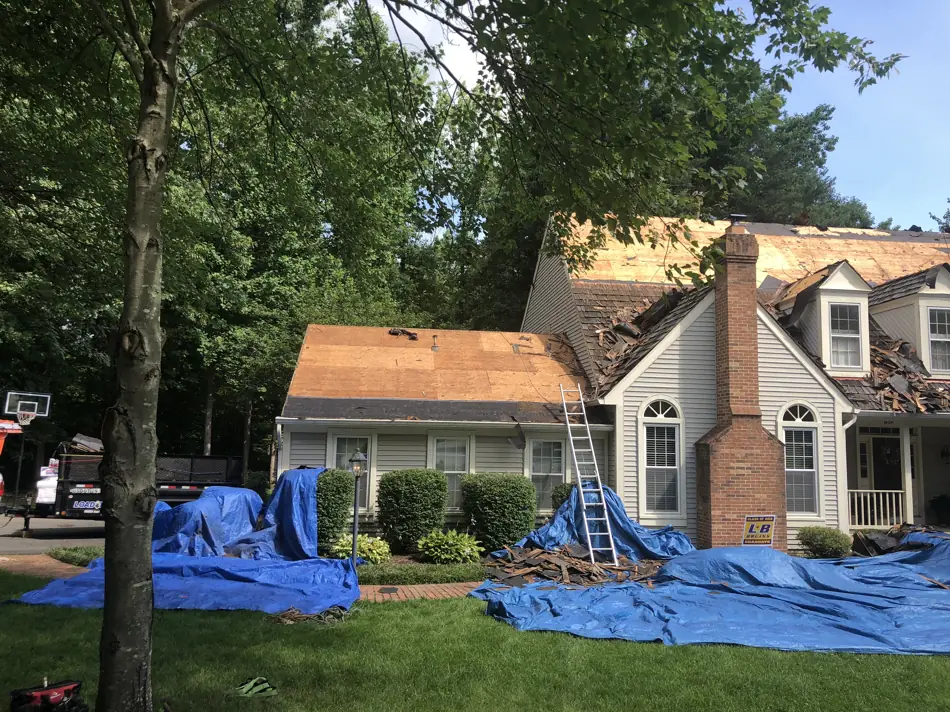
If water is coming in, get the roof tarped. Policies generally expect you to take reasonable steps to prevent further damage. Keep the receipts.
Photograph the roof from the ground, debris in the yard, and any ceiling or wall stains. Write down the date of the storm.
Our free 25-point inspection photographs every damaged area and tells you whether the damage is storm-related before you file.
Call your insurer or use its app with your policy number and the date of loss. Policies set deadlines for reporting damage, so file promptly.
Your insurer sends an adjuster to inspect. We meet the adjuster on the roof so nothing is missed in the scope.
The insurer issues an estimate of covered work. We compare it against what the roof needs and submit a supplement for anything missing.
We complete the work and send the final invoice to your insurer, which then releases any depreciation it held back. You pay your deductible.
Coverage
| Usually covered | Usually not covered |
|---|---|
| Wind damage: lifted, creased or missing shingles | Shingles worn out from age |
| Hail damage | Leaks from deferred maintenance |
| Fallen trees and limbs | Damage that was there before the storm |
| Interior water damage from a sudden storm leak | Slow leaks that went unrepaired |
Coverage depends on your own policy. This table describes what homeowners policies commonly cover; your policy wording and your insurer decide your claim.
The money
The deductible is the part of a covered loss you pay. It is set by your policy, as a flat amount or a percentage of the home's insured value.
Many policies pay in two checks: the depreciated value of the roof up front, then the held-back depreciation once the work is finished and invoiced. Some policies pay the depreciated value only.
If the work uncovers damage the first estimate missed, such as rotted decking, we document it and ask the insurer to add it to the claim.
What we do
We tarp active leaks the same day, photograph and measure the damage to the standard insurers require, meet your adjuster on site, and submit supplements for hidden and code-related items. On covered work we bill your insurer directly. See storm damage and insurance repair, or compare roof repair with roof replacement cost.
Questions, answered
Storm damage?
A photo report of every damaged area, before you decide whether to file.